Design improvement of a large machine tool considering external fluid media

One of the tasks of cutting fluid is the removal of chips from the working space. This is especially important in machine tools manufacturing parts with high material removal rate (MRR), such as cutting of lightweight aluminum alloys parts. We investigated a large 5-axis machine tool, with a working volume of 2200 x 1500 x 2100 mm.

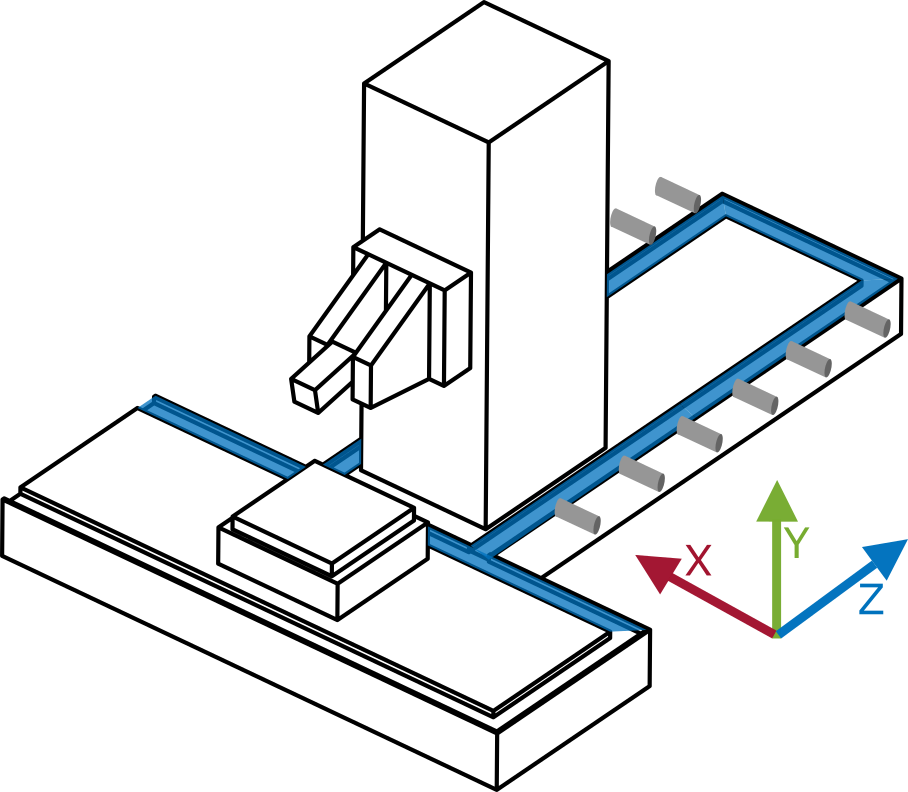
This machine tool delivers cutting fluid from two nozzles located at the back of the machine tool bed, as shown in the figure. However, introducing fluid media into the working space modifies the temperature distribution of the structure leading to thermally-induced displacements. Therefore, we developed this project to analyze and reduce the thermal errors associated to the supply of cutting fluid.
Among the different thermal errors, we focused on the tilt error motions of the Y- and Z-axis. Due to the large dimensions of the machine tool, the angular errors can have a significant impact on the displacements measured at the tool. We used inclinations levels, a device measuring changes with respect to the reference gravitational direction.

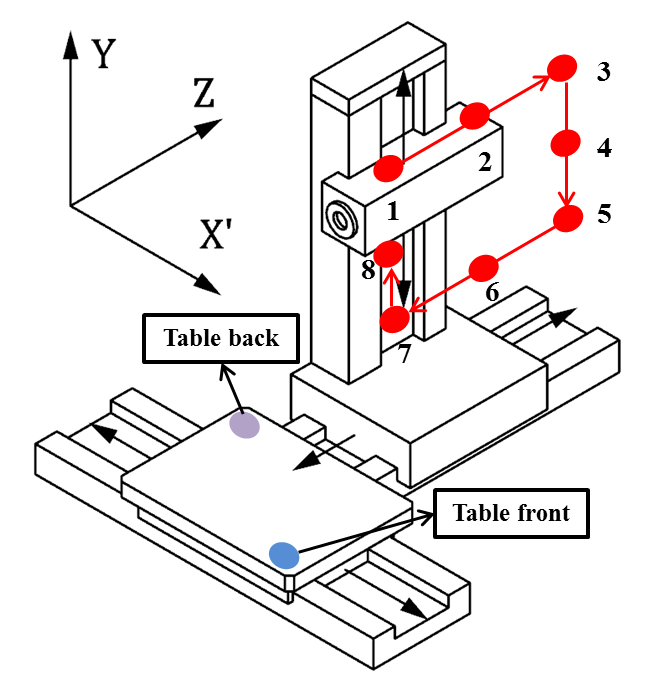
We developed a measuring cycle that can evaluate the variation of the tilt error motions of the Y- and Z-axis over time, as illustrated in the figure.

The evaluation of the measurements results led to the following two conclusions. Firstly, the introduction of the bed cutting fluid had a direct impact on the tilt error motions of the Z-axis. Furthermore, the measured tilt error motion was different at different positions of the linear axis. Secondly, the tilt error motion of the Y-axis was correlated with the fluctuations of the environmental temperature.

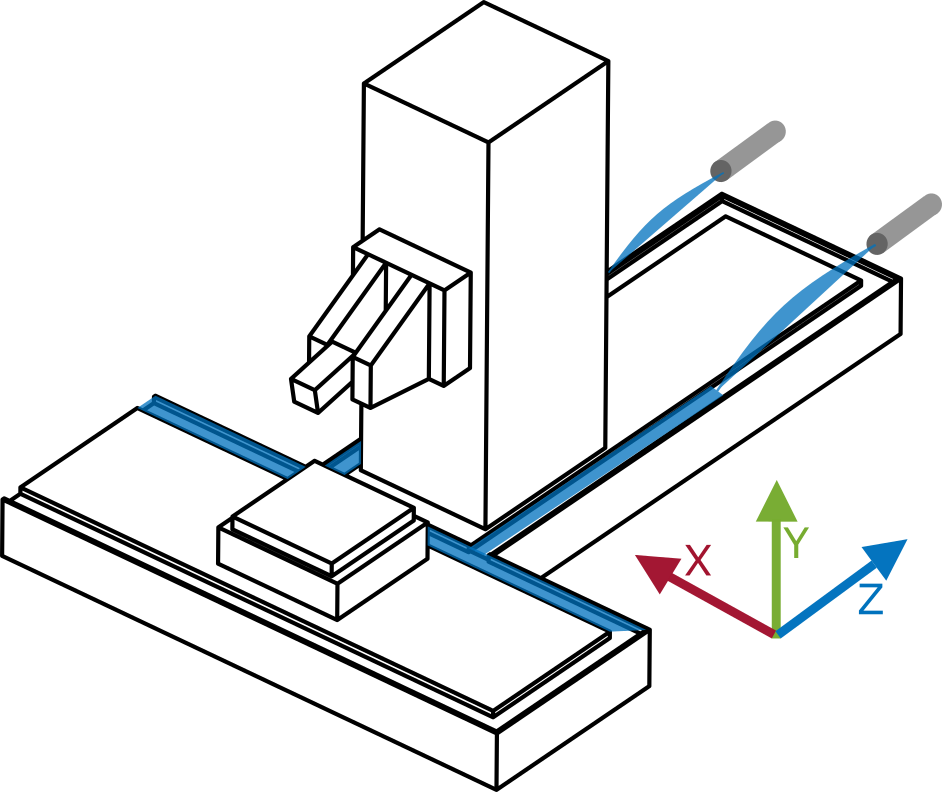
We used the information provided by the measurement data enhanced with thermo-mechanical simulations in order to redesign the introduction of cutting fluid into the bed. We proposed a new design that supplied the cutting fluid homogeneously along the stroke of the Z-axis, as shown in the figure.

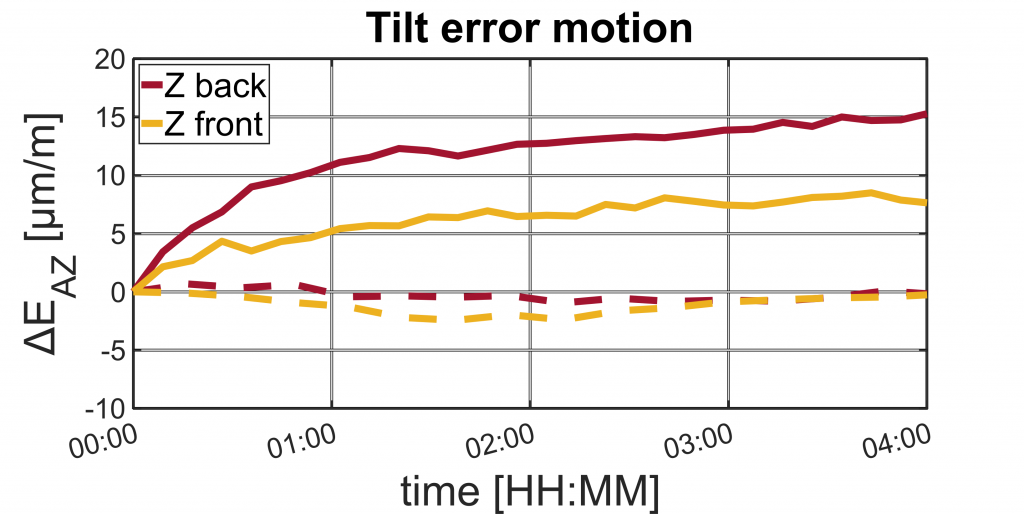
After installing the new system, we measured tilt error motions of the Z-axis with the original design. The figure below compares the tilt error motion of the original design (full line) and the new design (dashed line). The new design succeeded in reducing the tilt error motion. This project demonstrates that ensuring symmetry in the introduction of fluid media into the working space reduces the thermal errors of the machine tool.

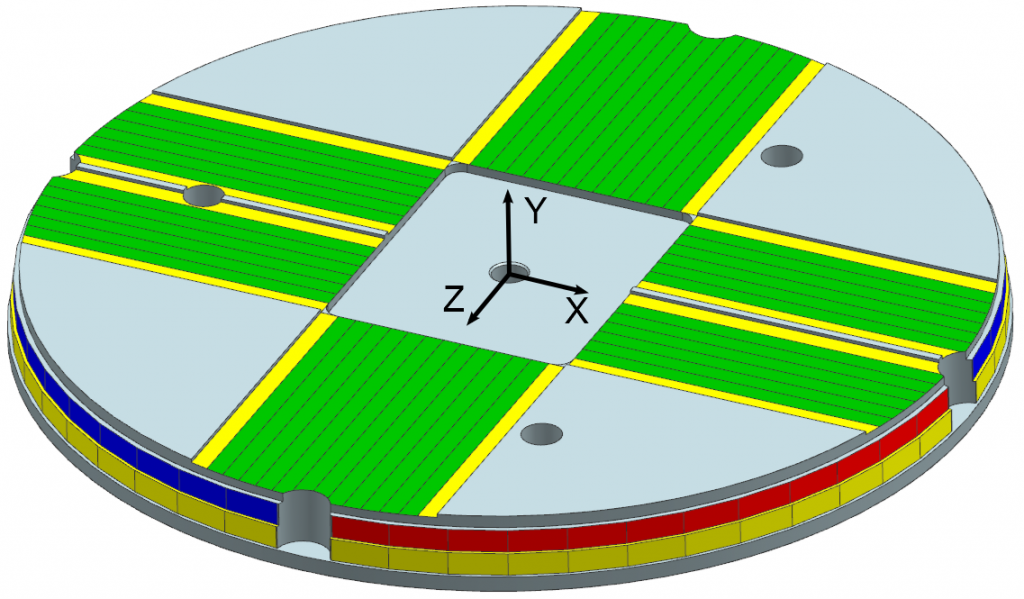
In order to visualize the thermal errors of the machine tool, we developed in this project a test piece. The design of the test piece enabled the evaluation of the errors in X-, Y, and Z-direction as well as the radial growth of the test piece.